01
Built for continuity
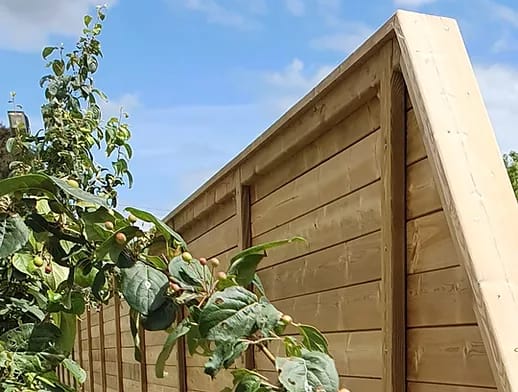
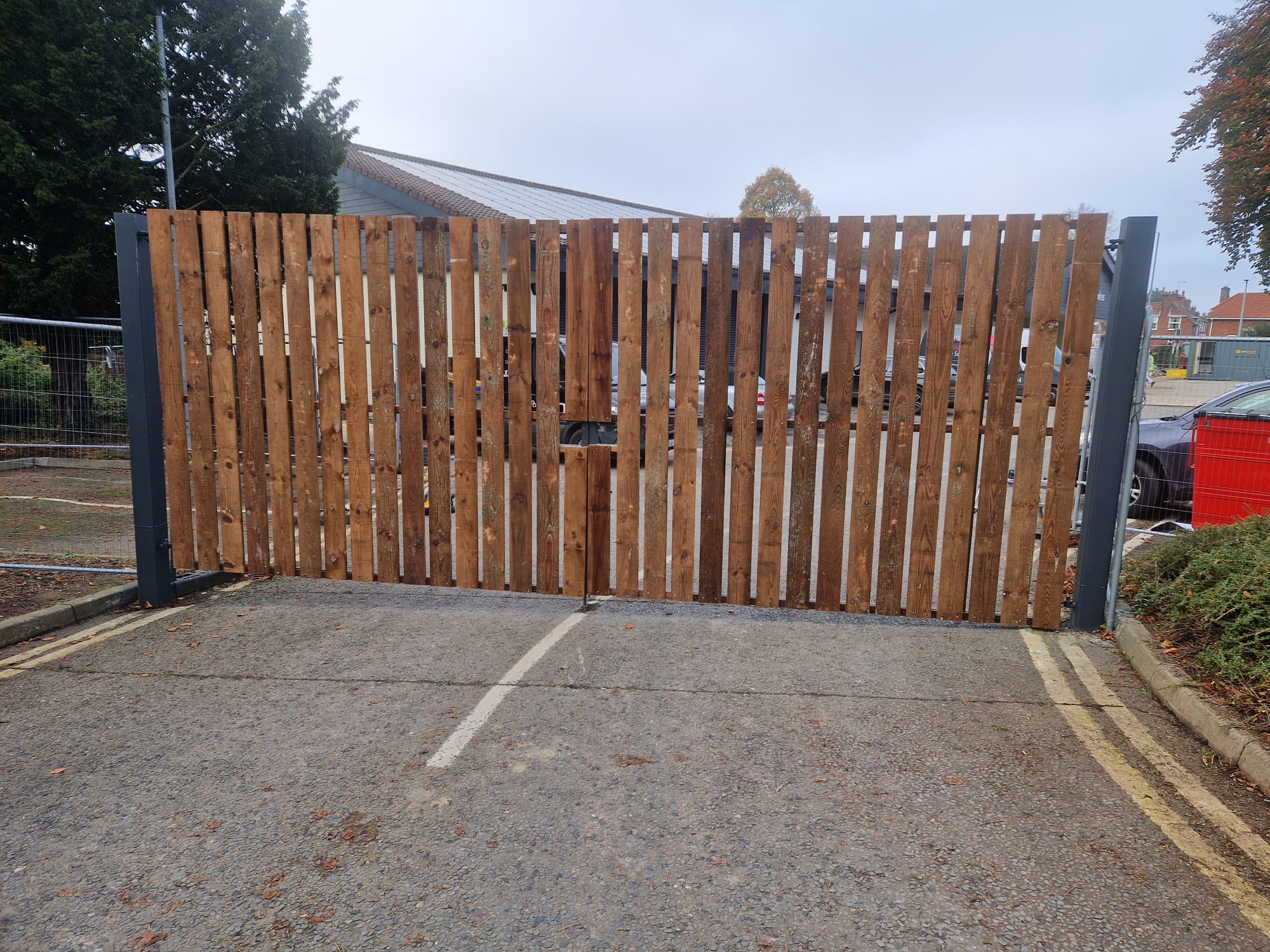
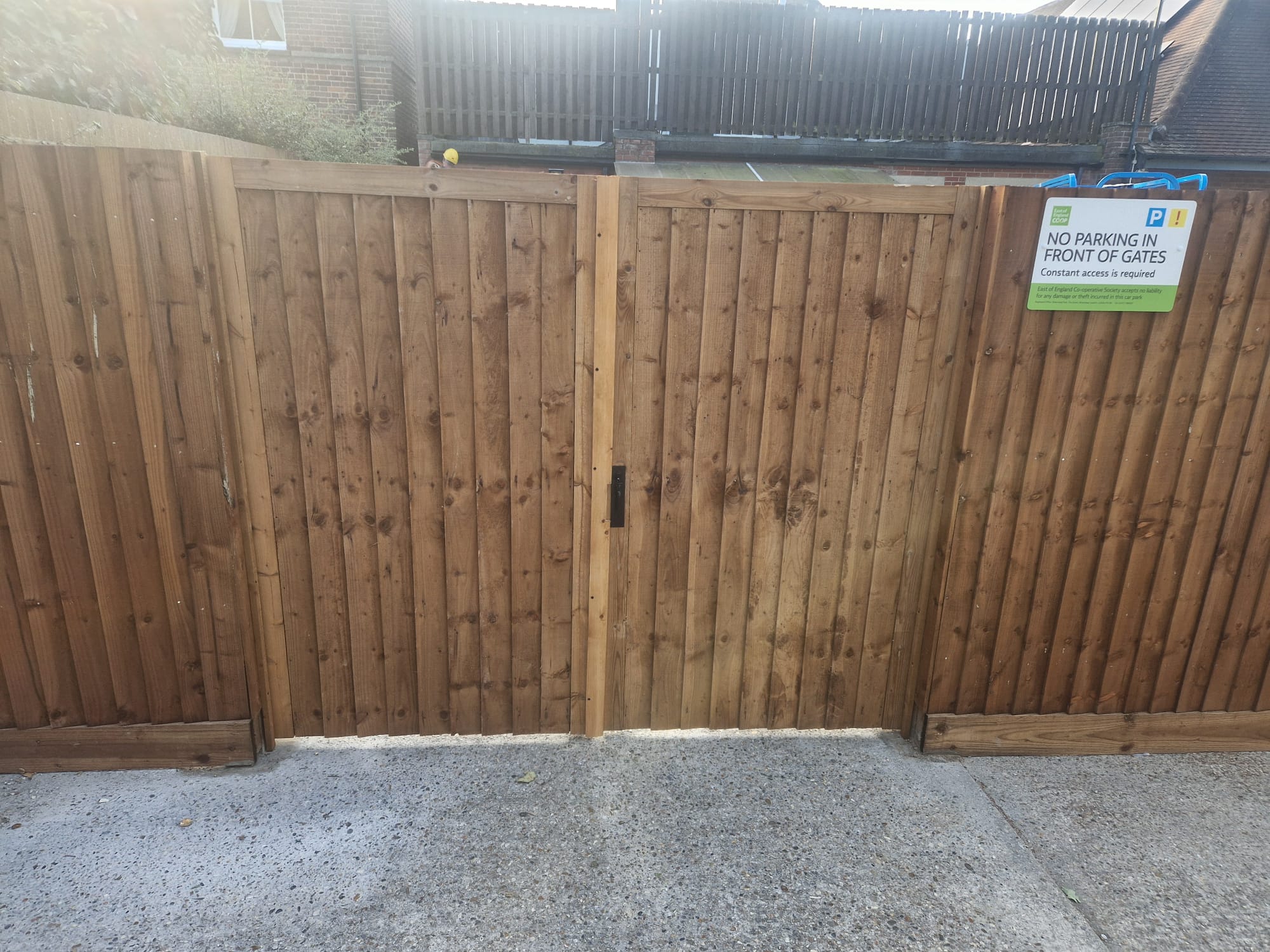
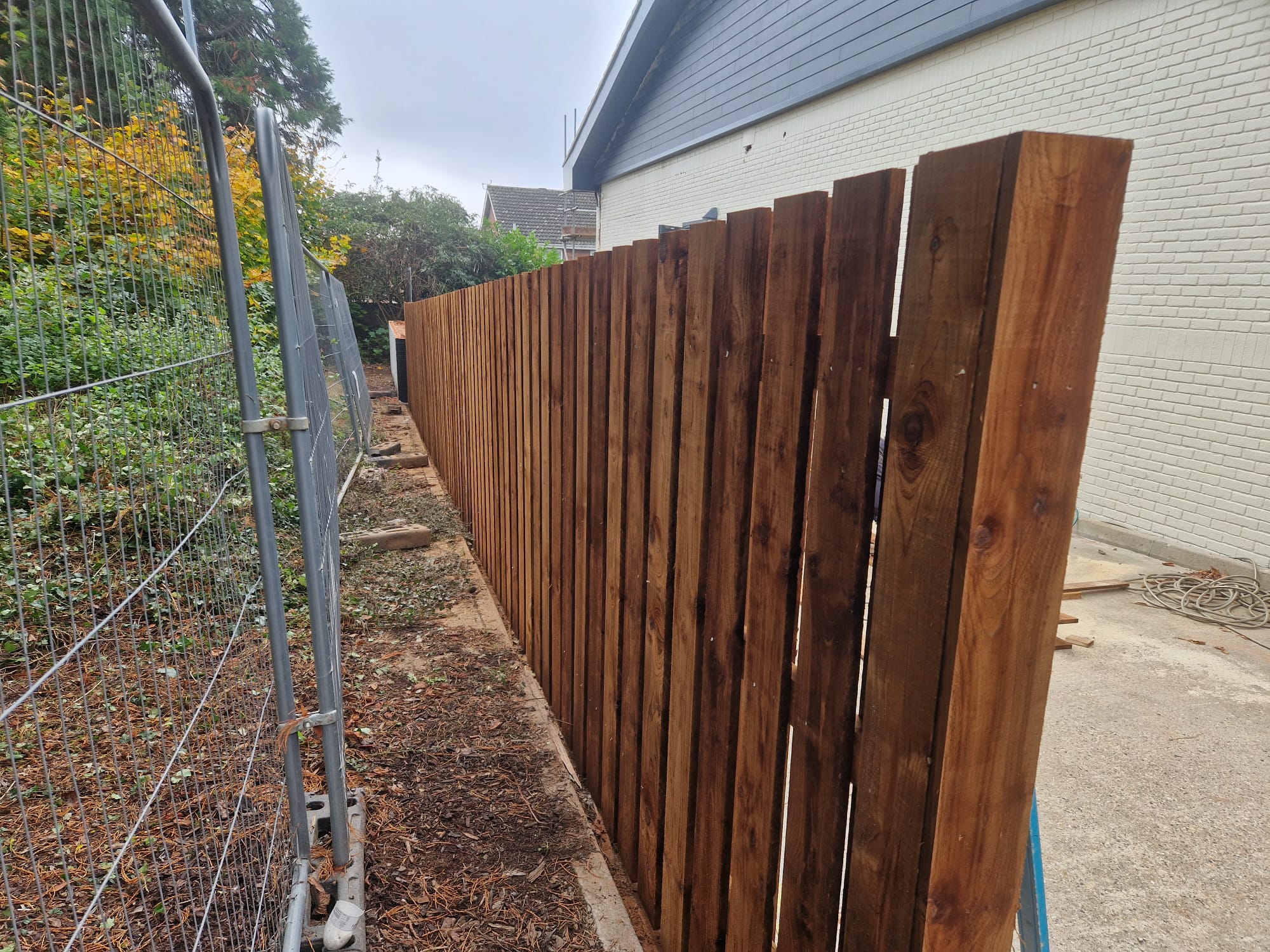
Close-jointed boards and a sealed ground line remove the air paths that let noise straight through ordinary fencing.
Noise reduction barriers
Dense, gap-free acoustic fencing specified and installed where noise from a road, yard, plant or car park reaches neighbouring properties.
Commercial fencing installation across Essex and surrounding areas
Typical applications
Roadside boundaries, yards, plant enclosures, housing schemes
Construction
Mass, gap-free jointing and a sealed ground line
Materials
Pressure-treated timber; composite systems where specified
Access arrangements
Acoustic-detailed gates to maintain the barrier line
Overview
An acoustic fence works on two principles: mass and continuity. Mass reflects and absorbs sound energy, and continuity stops it leaking through. A standard fence fails on the second point long before the first: the gaps between boards, at the ground line and around posts let noise straight through, however solid the fence looks.
So acoustic construction is detailed differently. Boards are close-jointed or overlapped to eliminate air paths, the ground line is sealed rather than left open, and posts and joints are arranged so there is no continuous slot from one side to the other. Height and position also matter, because a barrier only works where it interrupts the line between the source and the listener.
It is specified on boundaries beside busy roads, around yards and loading areas, next to external plant, pumps and chillers, on new housing schemes bordering commercial premises, and where a school or leisure facility adjoins homes. Frequently the driver is a planning condition or a neighbour complaint rather than a general wish for a quieter site.
We are careful about what we promise. Real-world reduction depends on the noise source, its frequency, distances, heights and reflections from surrounding surfaces, not on the fence alone. Where a specific figure has to be met, that belongs with an acoustic consultant's assessment, and we build to the specification that comes out of it.
Applications
Acoustic barriers are worth specifying where noise reaching a neighbour is the actual problem to be solved.
Why it works
Close-jointed boards and a sealed ground line remove the air paths that let noise straight through ordinary fencing.
Heavier board construction on commercially sized posts, rather than a standard panel fence called acoustic.
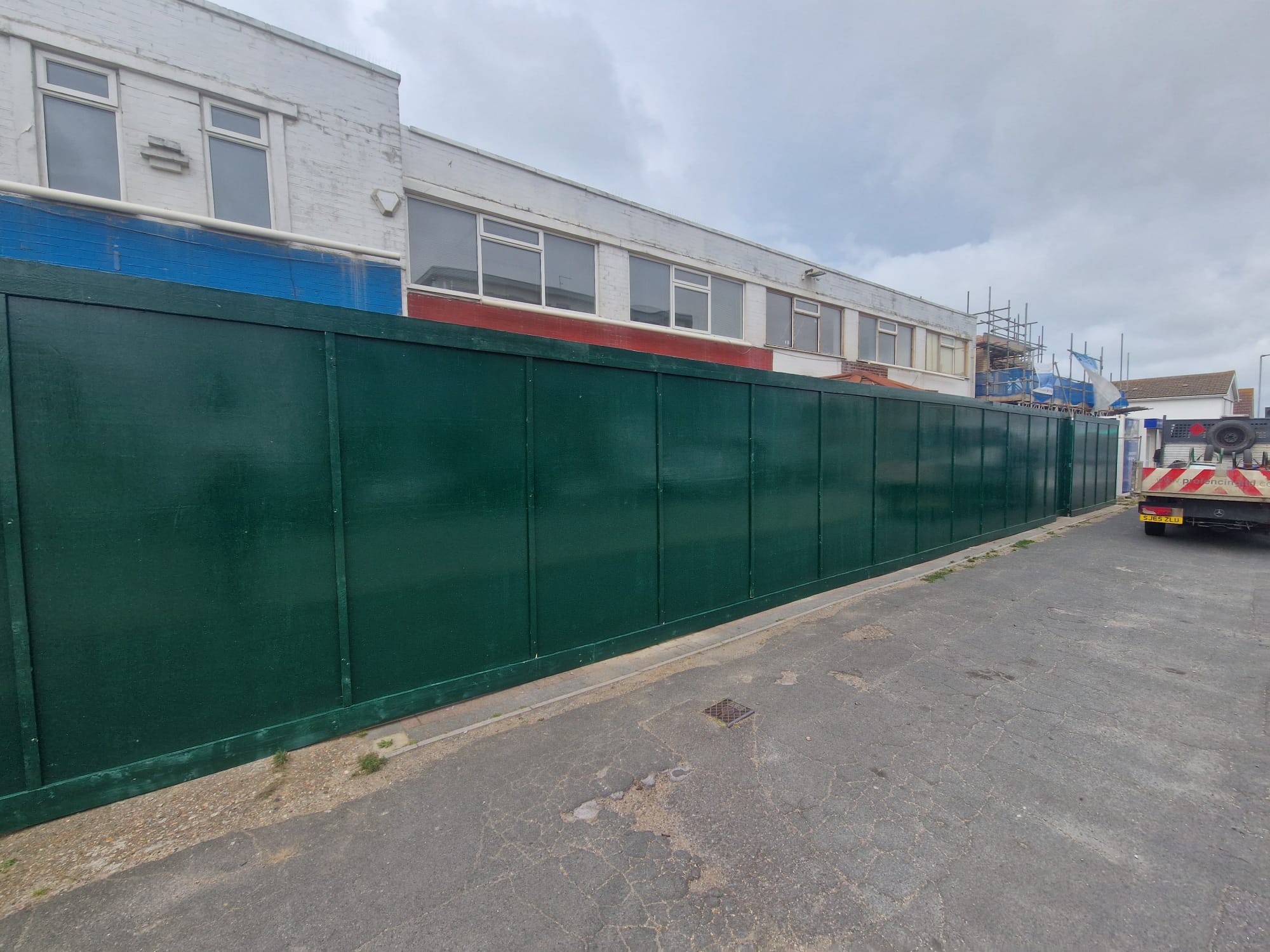
The same construction that blocks sound also blocks sightlines into a yard or service area.
Gates and junctions detailed so the barrier line is not undone by the opening in it.
Specification
Height, construction and position are set by the noise source and the boundary, and confirmed following a site survey.
Final specification is confirmed following a site survey.
Our process
We inspect the boundary, access, ground conditions and operational requirements.
We recommend a suitable fencing system, height, finish and gate configuration.
The work is coordinated to minimise disruption and maintain safe site access.
The fencing and gates are installed carefully, checked and left with a clean, consistent finish.
Specification enquiry
Useful acoustic fencing starts with the noise source, the boundary line and who is affected. Pro Fencing can assess the site, recommend a construction, height and gate arrangement, and build to an acoustic consultant's specification where a planning condition sets a specific requirement.
Why Pro Fencing
We assess how the boundary needs to perform before recommending a fencing system, finish or gate configuration.
Fencing for industrial, educational, commercial and public environments.
Recommendations based on the boundary, ground, access and security requirement.
Installation coordinated to maintain safe access and minimise disruption.
A defined route from site survey and specification through to installation.


Coverage
Pro Fencing supplies and installs commercial fencing systems throughout Essex. We work with businesses, schools, contractors, sports facilities and public-sector organisations, providing site-specific fencing and gate solutions for new installations, upgrades and boundary replacements.
FAQs
That depends on the source, its frequency content, the distances and heights involved and reflections from nearby surfaces, so any single figure quoted without an assessment is unreliable. What we can say is that mass and the absence of gaps are what produce a real reduction, and that a barrier only helps where it breaks the line between source and listener.
Close-board fencing helps a little because it blocks the line of sight, but noise passes easily through small gaps between boards, at the ground line and around posts. Acoustic construction is specifically detailed to remove those air paths and to add mass, which is what makes the difference measurable rather than psychological.
Often, yes. The barrier has to interrupt the path between the noise source and the affected windows or garden, and higher sources such as raised yards or elevated roads need more height to achieve that. Where extra height requires planning consent, that needs settling before the specification is fixed.
Yes, but the ground line needs particular care. Barriers are stepped, and each step has to be closed off so the drop does not leave a gap underneath, which would undo much of the benefit. We set the line out on site and detail the ground closure as part of the installation.
Yes. Where a planning condition or noise assessment sets out a required construction, mass or height, we build to that specification and keep the detailing consistent with it, including at gates and junctions. Where no assessment exists, we advise on a sensible construction without claiming a specific decibel outcome.
We install acoustic fencing throughout Essex and the surrounding areas, including Basildon, Brentwood, Chelmsford, Wickford, Rayleigh, Grays, Thurrock, Southend-on-Sea, Romford, Harlow and Colchester. Larger schemes beyond the county are also worth discussing.
Get started
Talk to Pro Fencing about your site, security requirements and installation timeframe. We can assess the boundary and recommend a suitable solution.