01
Straightforward and reliable
Fewer moving parts than a sliding gate, so less to maintain on a well-built leaf.
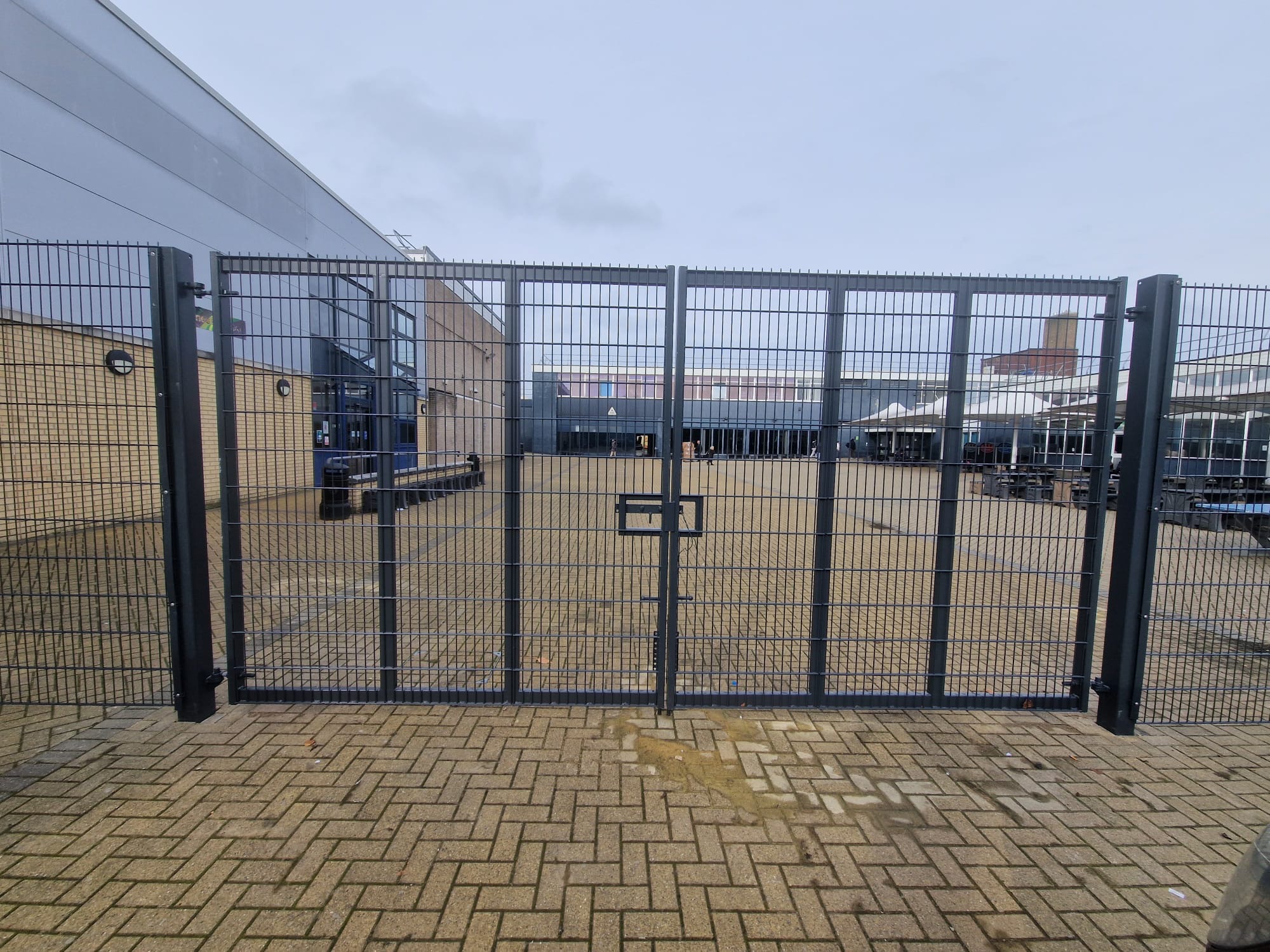
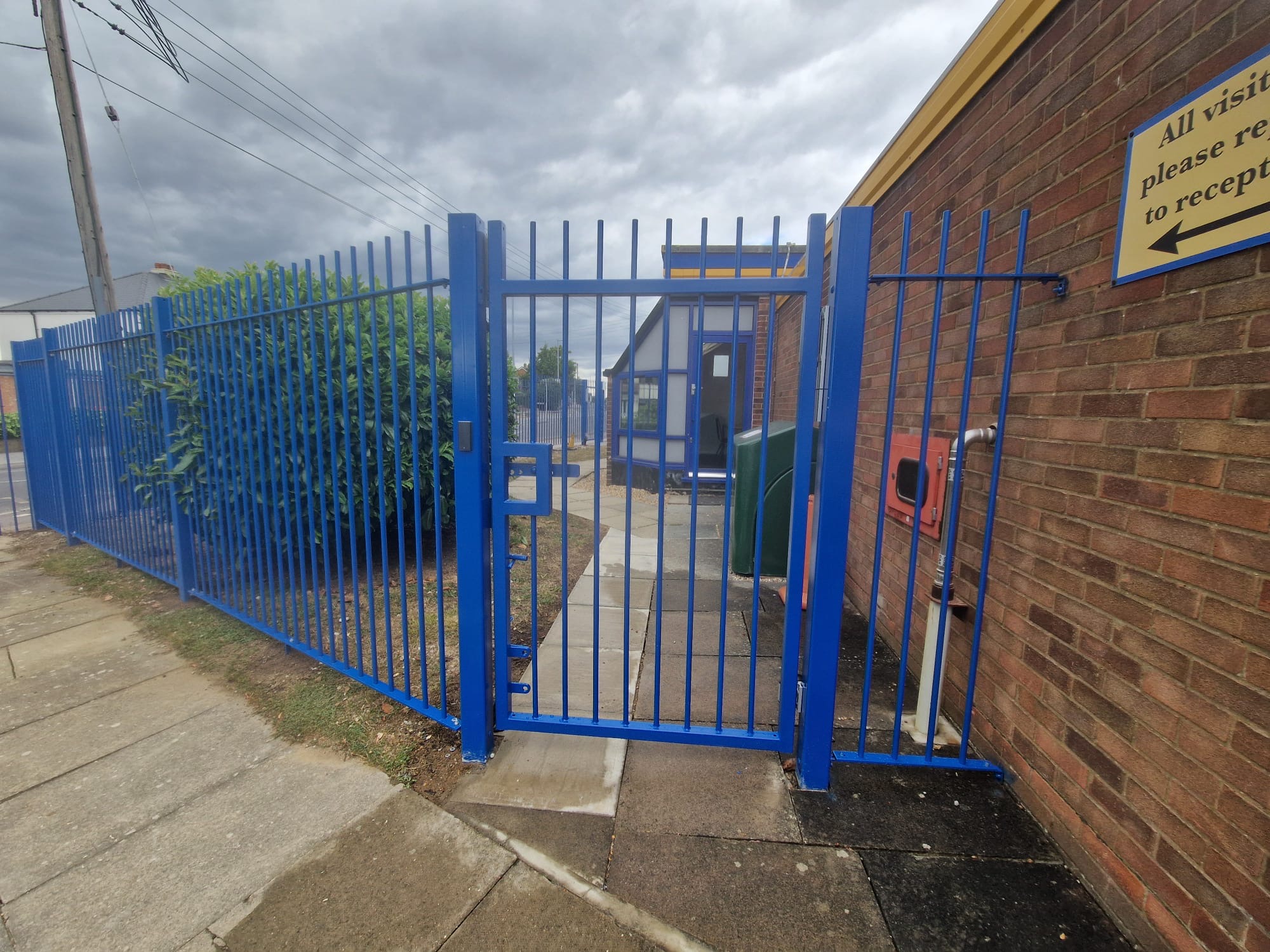
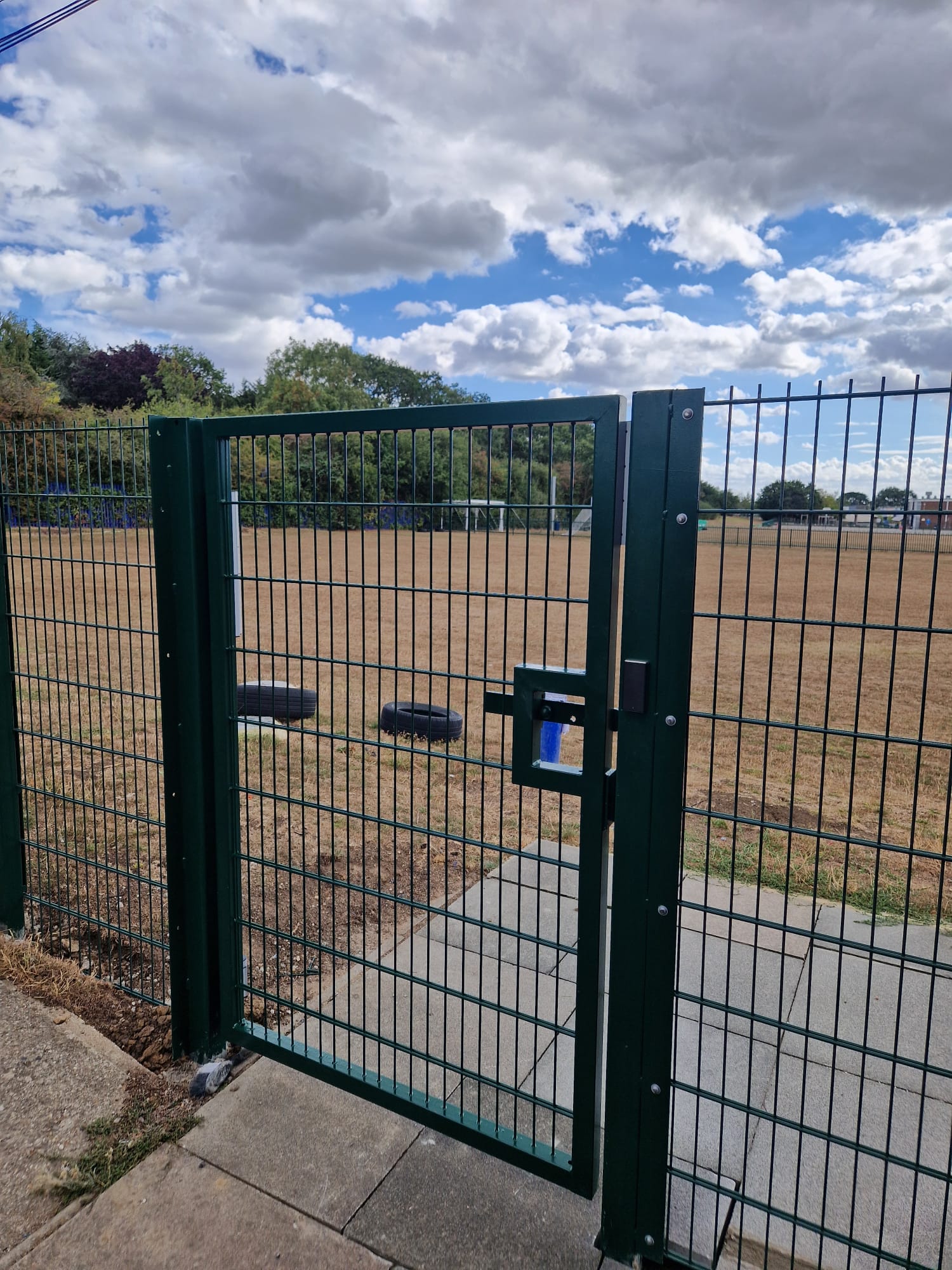
Single and double-leaf gates
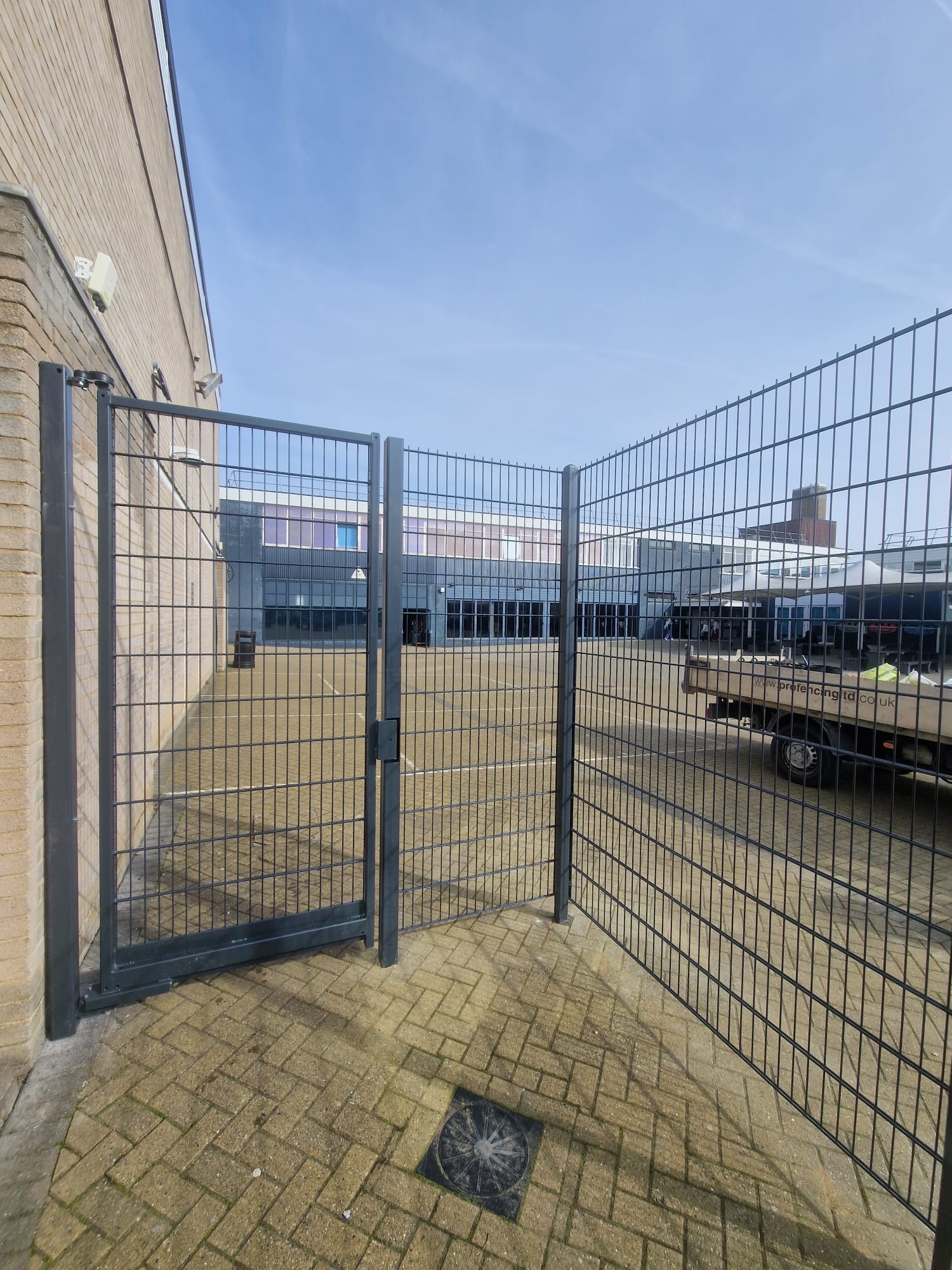
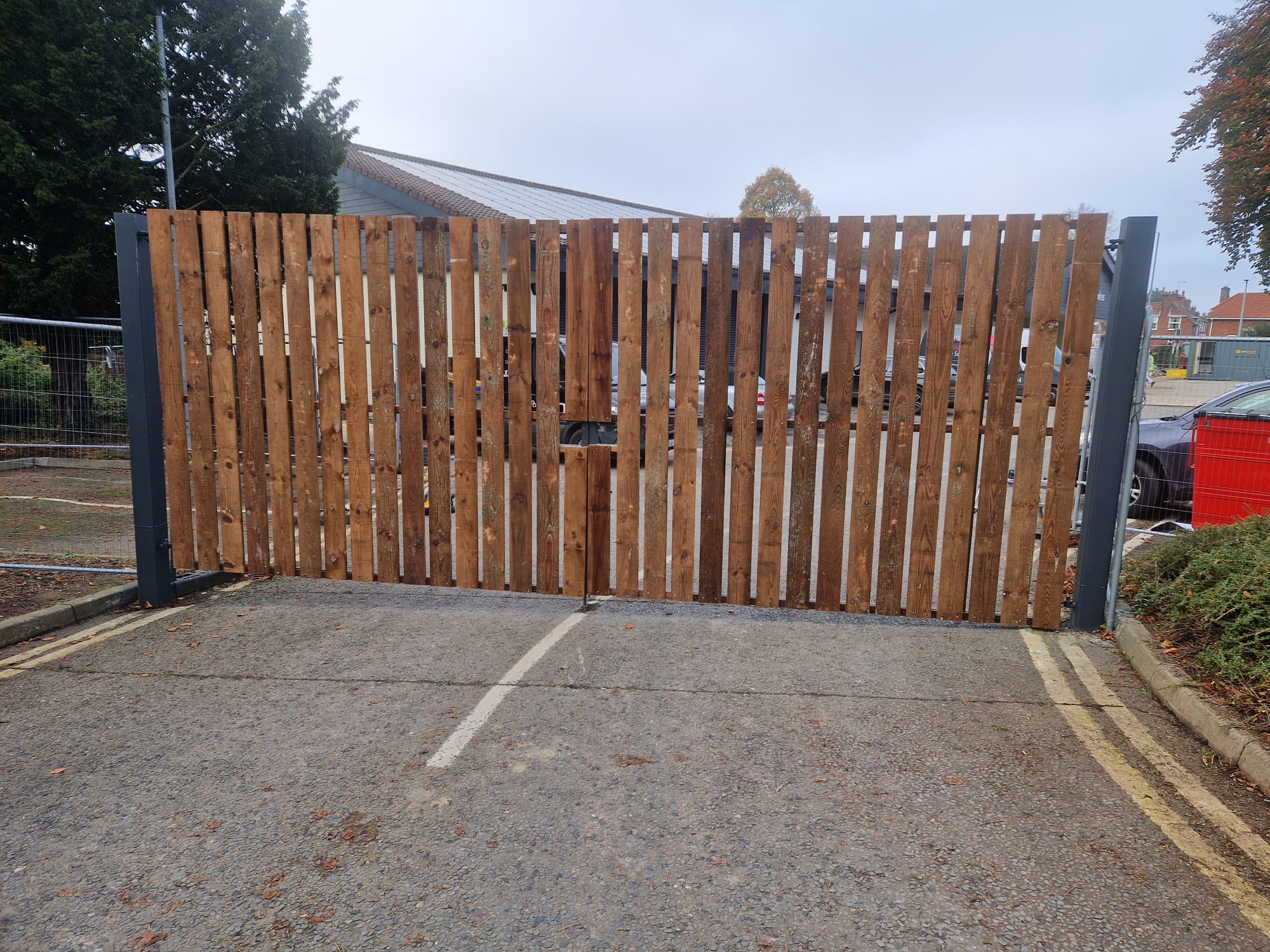
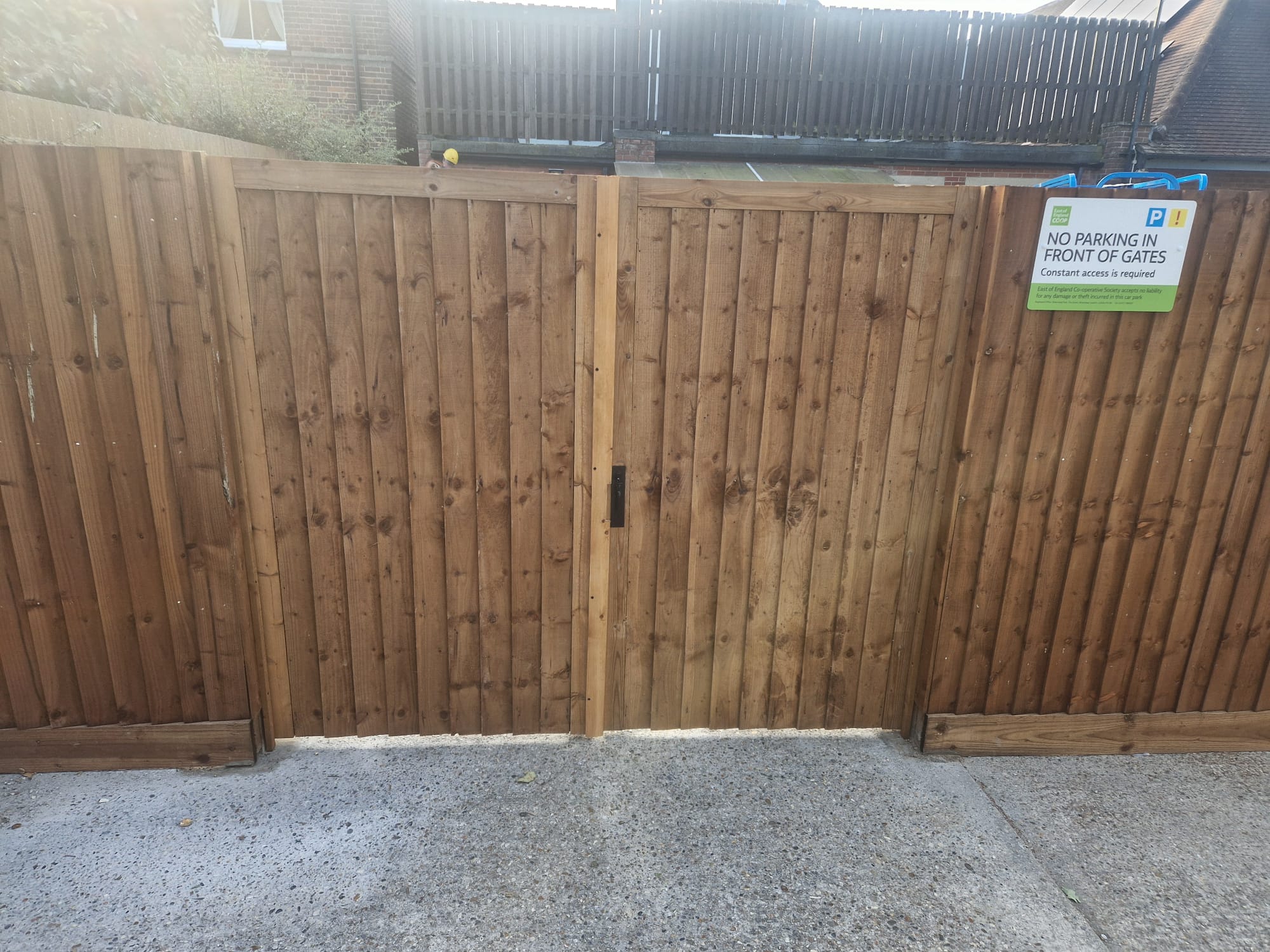
Single and double-leaf swing gates built to match the fence line and installed with manual or automated operation across commercial sites in Essex.
Commercial fencing installation across Essex and surrounding areas
Typical applications
Yards, car parks, schools, compounds, service access
Systems
Single-leaf and double-leaf swing gates
Operation
Manual, or automated with underground or ram operators
Finish options
Galvanised, or powder-coated to match the perimeter
Overview
A swing gate is the most straightforward way to close an opening, and on the right entrance it is also the most economical and the most reliable. There is less to go wrong than on a sliding gate, provided the leaf is built square, hung on the right hinges and carried by posts and foundations sized for the weight.
Leaf width is the deciding factor. A single leaf is fine up to a moderate opening; beyond that the weight and leverage on the hinge side become the problem, so wider entrances use two leaves. Double gates need a drop bolt or ground socket at the meeting point and a level enough surface for both leaves to close cleanly.
The common failures are predictable. Undersized posts lean, shallow foundations move, lightweight hinges wear and the gate starts dragging, and a leaf swinging over a slope catches on the ground. We size posts and concrete against leaf weight and check the fall across the opening before deciding whether a swing gate is the right choice at all.
Automation is available on swing gates using underground or ram operators, with photocells and force limits set so the leaf cannot strike a person or vehicle. It works well on car parks and staff entrances; on busy HGV entrances a sliding arrangement is usually the better answer.
Applications
Swing gates suit openings with clear space behind them and a reasonably level approach.
Why it works
Fewer moving parts than a sliding gate, so less to maintain on a well-built leaf.
Where there is space behind the line and a level approach, a swing gate is usually the best value.
Braced frames, heavy hinges and posts sized to leaf weight, which is what stops a gate dragging.
The same infill and finish as the perimeter, with drop bolts and closures suited to commercial use.
Specification
Leaf arrangement, hinges, posts and any automation are confirmed after surveying the opening and its levels.
Final specification is confirmed following a site survey.
Our process
We inspect the boundary, access, ground conditions and operational requirements.
We recommend a suitable fencing system, height, finish and gate configuration.
The work is coordinated to minimise disruption and maintain safe site access.
The fencing and gates are installed carefully, checked and left with a clean, consistent finish.
Specification enquiry
Whether a swing gate suits an opening comes down to width, the space behind the line and the fall across the entrance. Pro Fencing can survey the opening, recommend single or double leaves, size the posts and hinges to the weight, and advise where a sliding gate would serve the entrance better.
Why Pro Fencing
We assess how the boundary needs to perform before recommending a fencing system, finish or gate configuration.
Fencing for industrial, educational, commercial and public environments.
Recommendations based on the boundary, ground, access and security requirement.
Installation coordinated to maintain safe access and minimise disruption.
A defined route from site survey and specification through to installation.


Coverage
Pro Fencing supplies and installs commercial fencing systems throughout Essex. We work with businesses, schools, contractors, sports facilities and public-sector organisations, providing site-specific fencing and gate solutions for new installations, upgrades and boundary replacements.
FAQs
A single leaf works up to a moderate width; beyond that the leverage on the hinge side makes it heavy to use and hard on the posts, so a double-leaf arrangement is used instead. Very wide openings are usually better served by a sliding gate, because two long leaves swinging into a yard rarely suits how the space is used.
Yes, in practice. A drop bolt or ground socket at the meeting point stops the leaves flexing, keeps the gate straight under wind load and gives the locking arrangement something solid to work against. It needs a sound surface to drop into, which is something we check at survey.
Almost always because the post or foundation has moved, or the hinges have worn under a leaf heavier than they were sized for. Both are specification issues rather than wear and tear. Sizing posts, concrete and hinges to the actual leaf weight prevents it, which is why we do not fit a standard gate to every opening.
Yes, using underground operators or ram arms, with photocells and force settings arranged so the leaf cannot strike a person or vehicle. It suits car parks and staff entrances well. On entrances used constantly by large vehicles, a sliding gate normally copes better with the duty cycle and the space constraints.
It depends on the direction and amount of fall. A gate opening uphill will catch on the ground, and one opening downhill can swing away from you. Small falls can be handled by setting the leaf height and hinge positions carefully; larger ones usually point towards a sliding gate.
We install commercial swing gates throughout Essex and the surrounding areas, including Basildon, Brentwood, Chelmsford, Wickford, Rayleigh, Grays, Thurrock, Southend-on-Sea, Romford, Harlow and Colchester.
Get started
Talk to Pro Fencing about your site, security requirements and installation timeframe. We can assess the boundary and recommend a suitable solution.