
01
Built for constant use
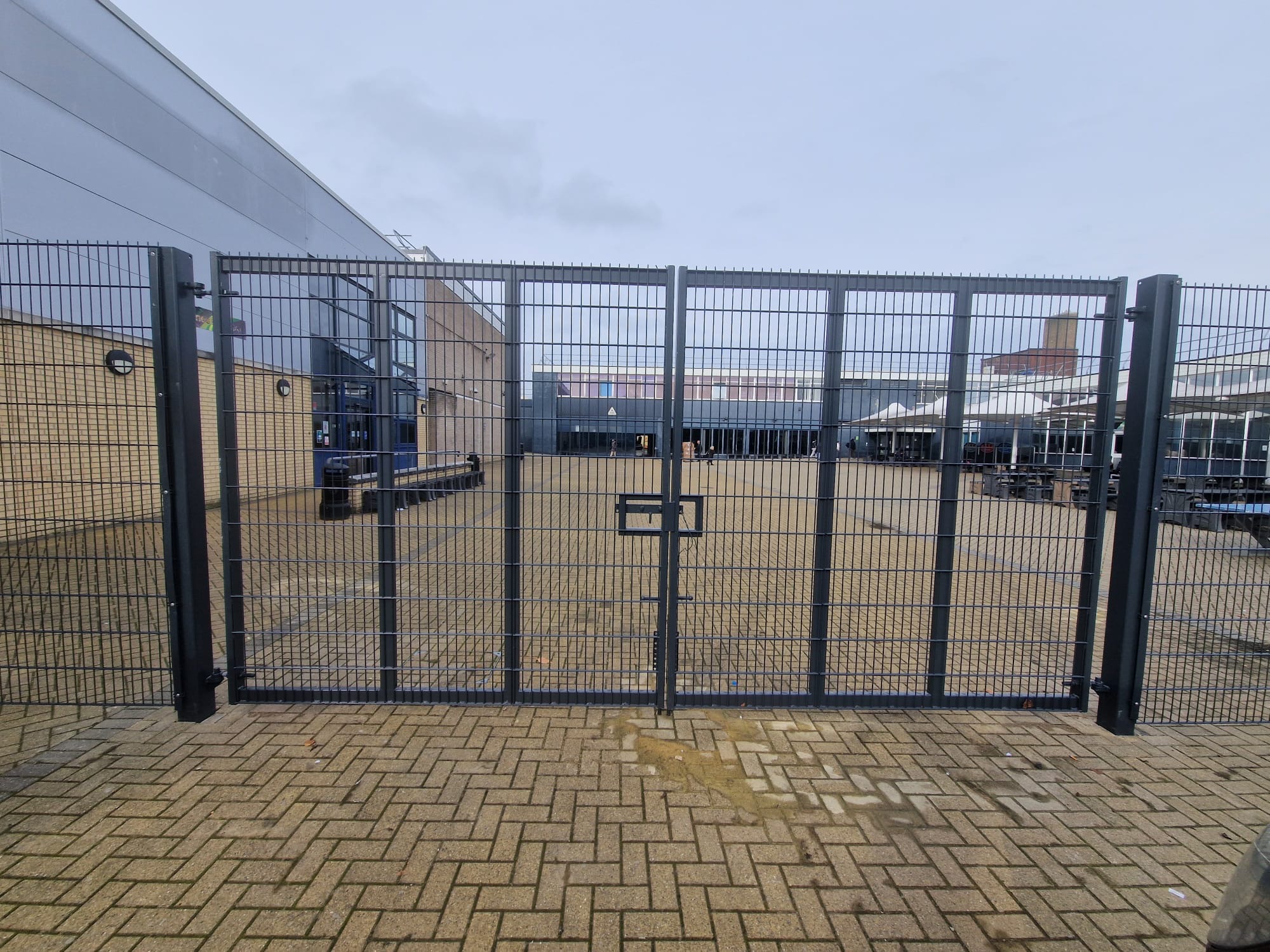
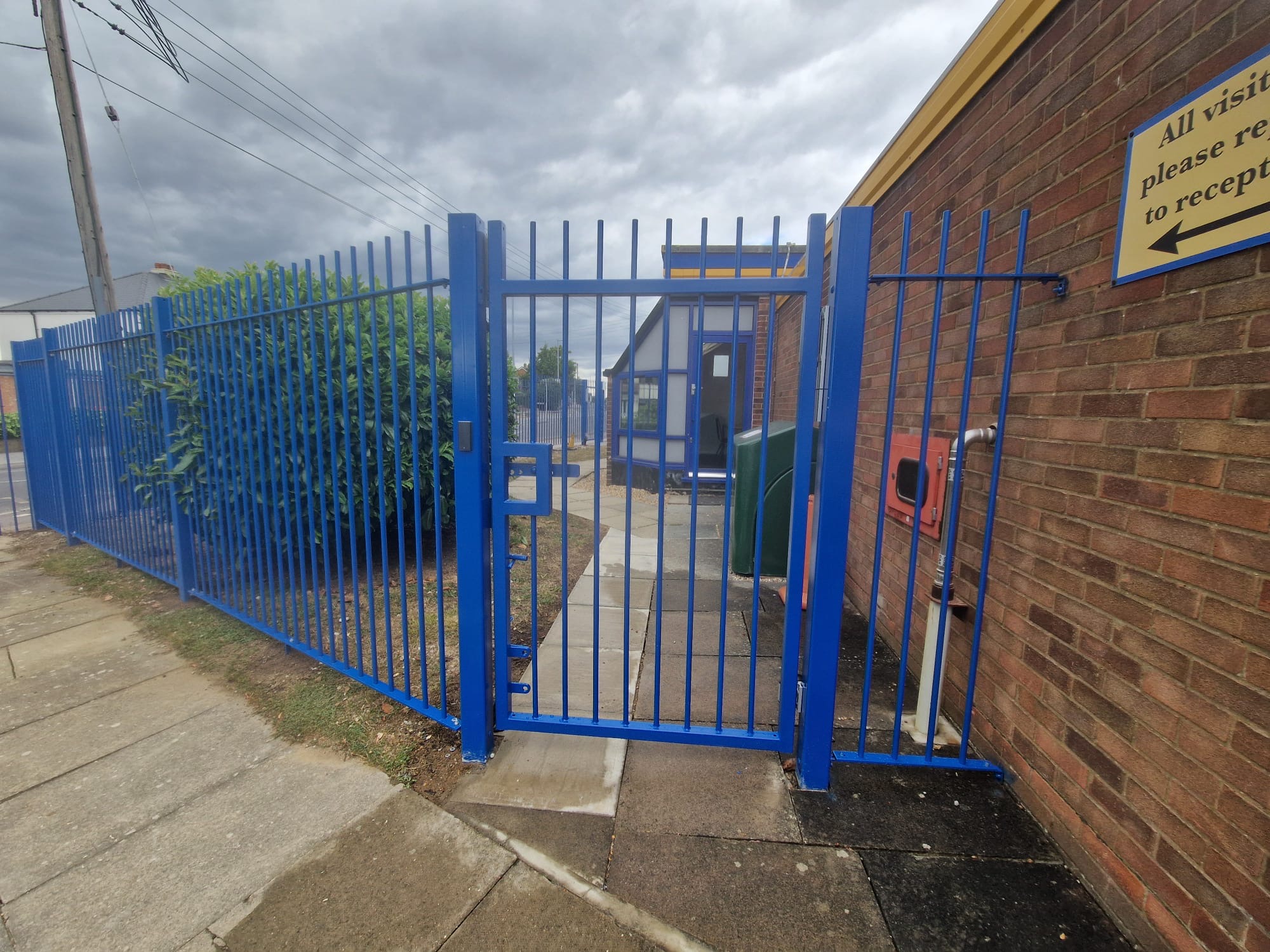
Commercial hinges, braced frames and proper foundations, because this is the most used part of the perimeter.
Personnel access openings
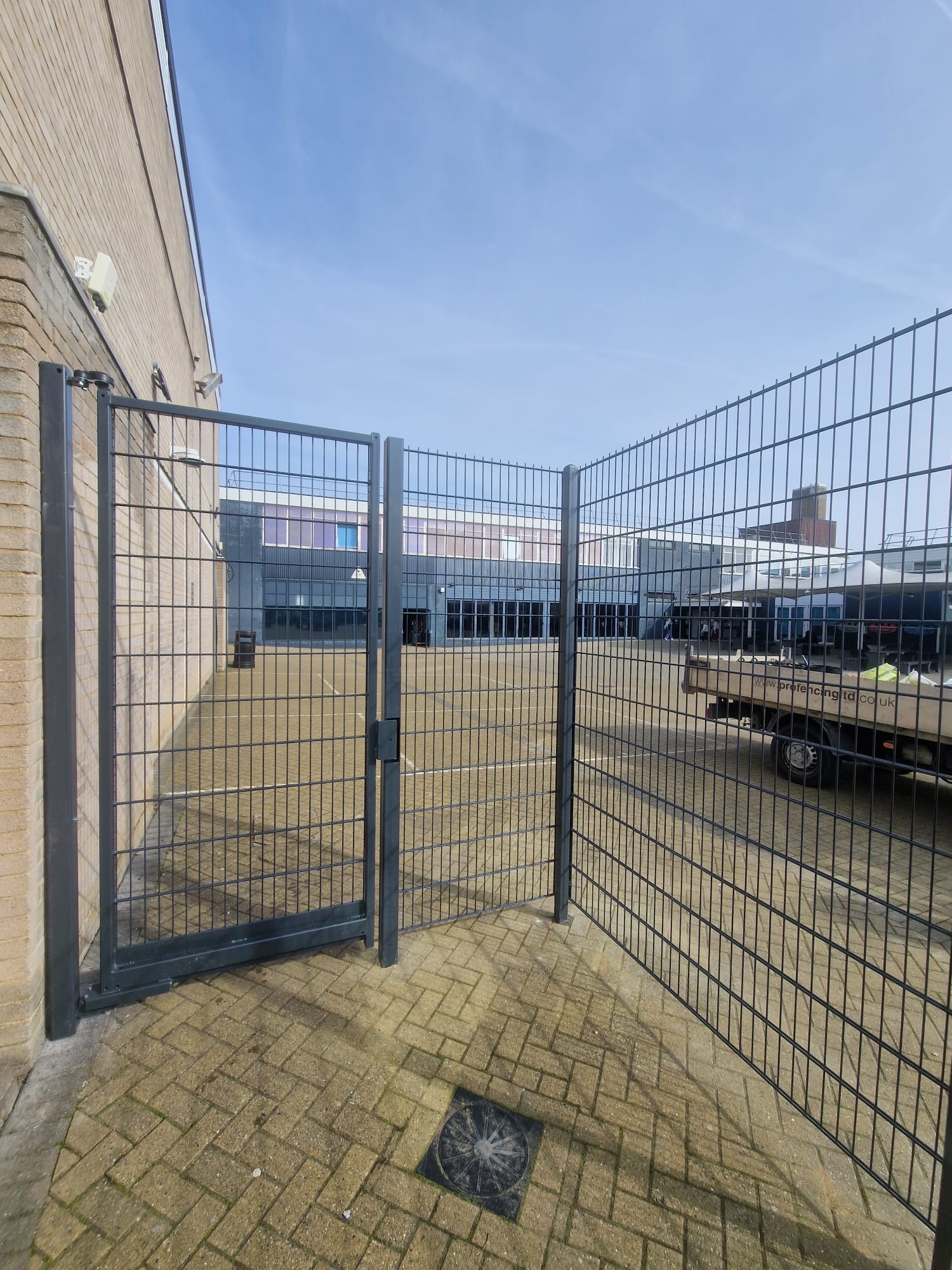
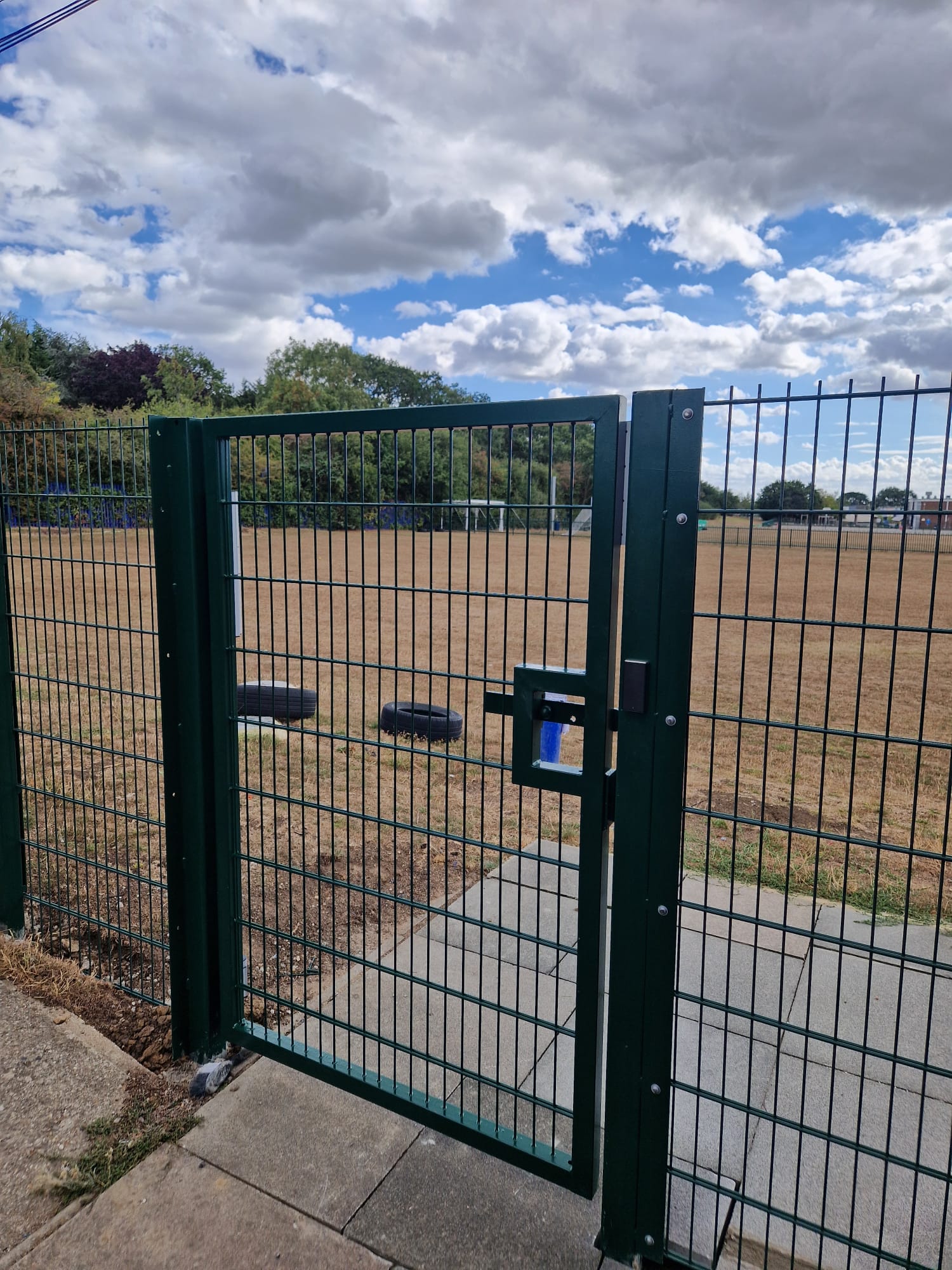
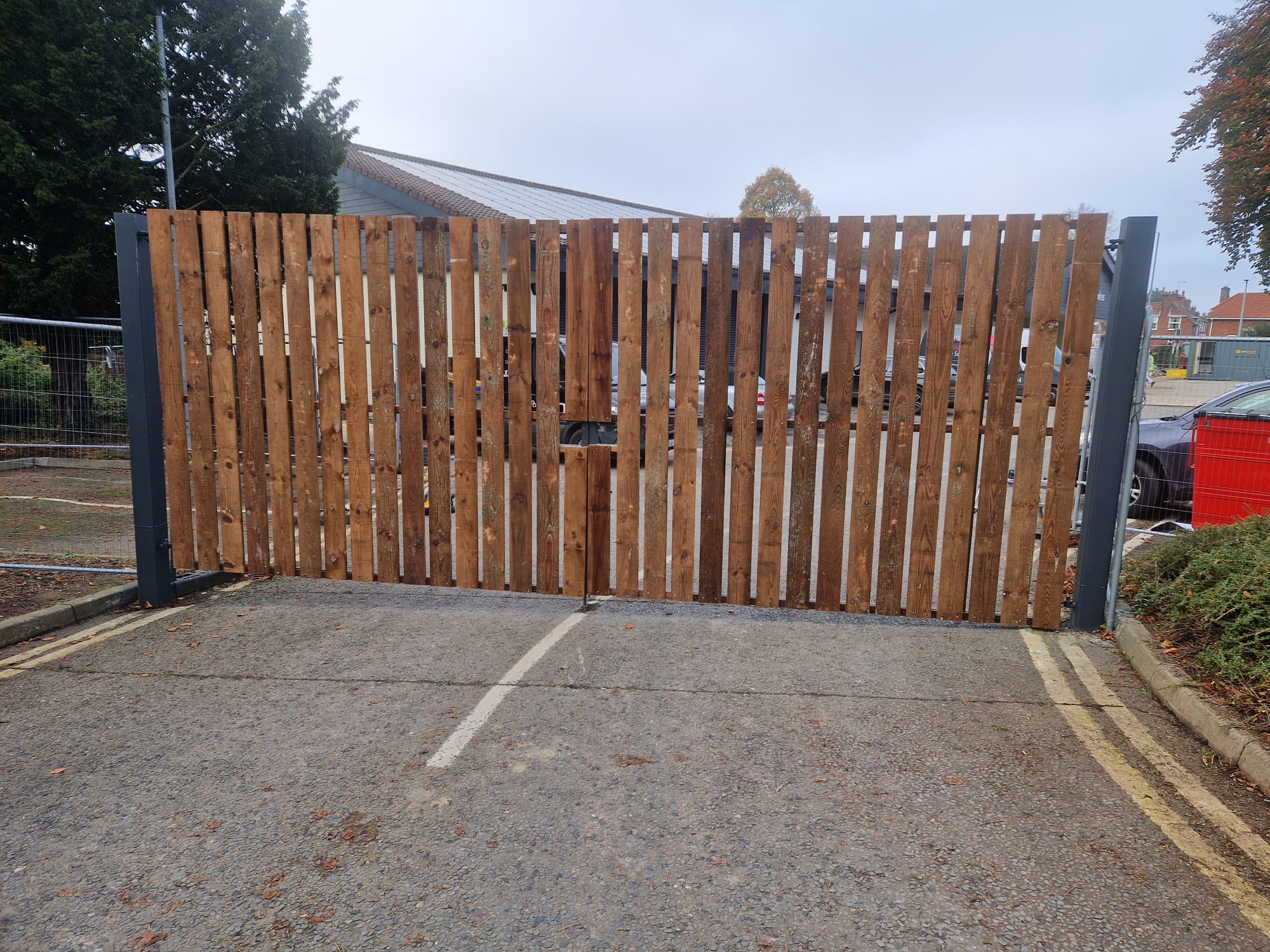
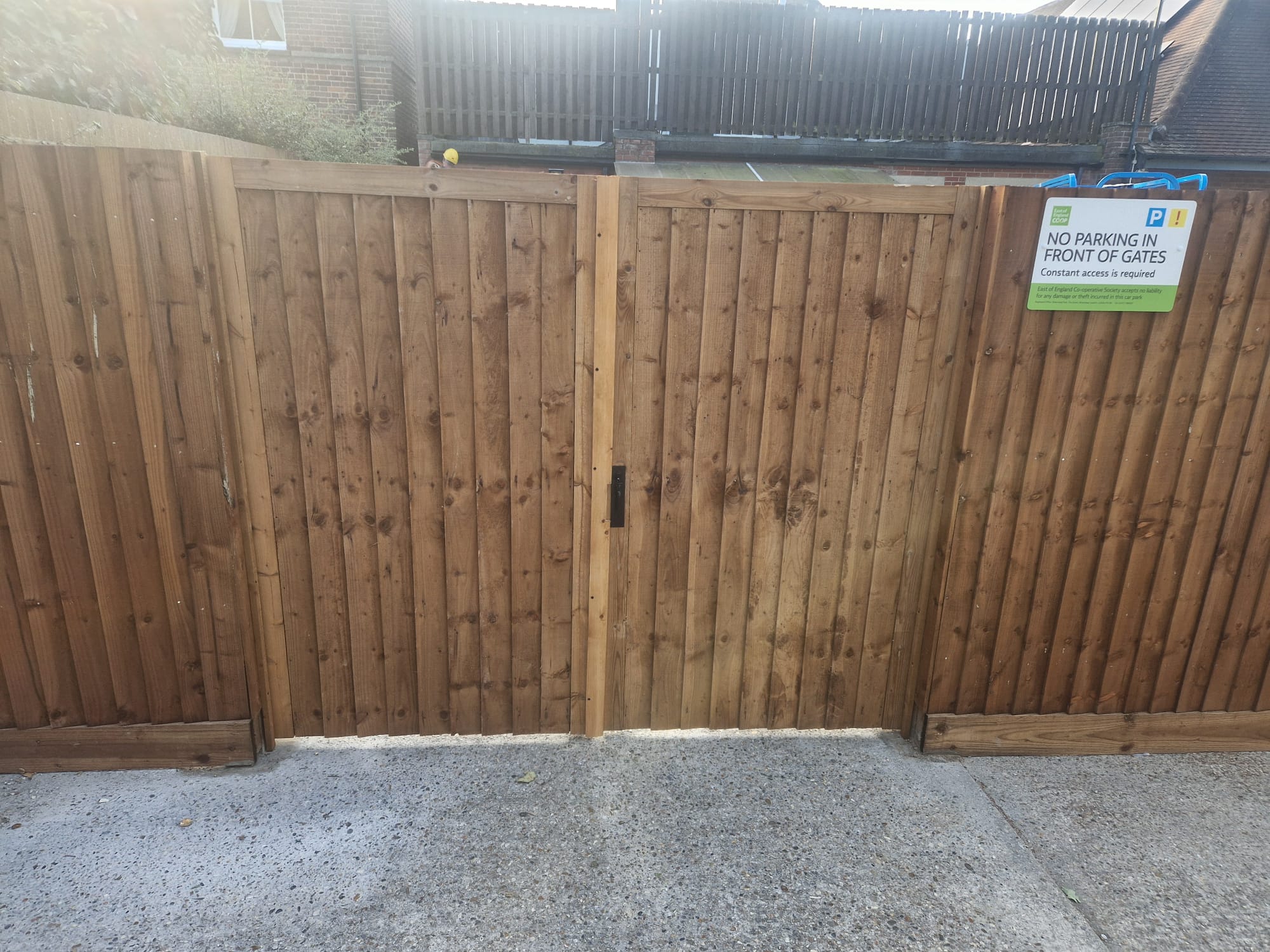
Pedestrian and personnel gates installed to give staff, visitors and contractors a defined route into a site without weakening the perimeter.
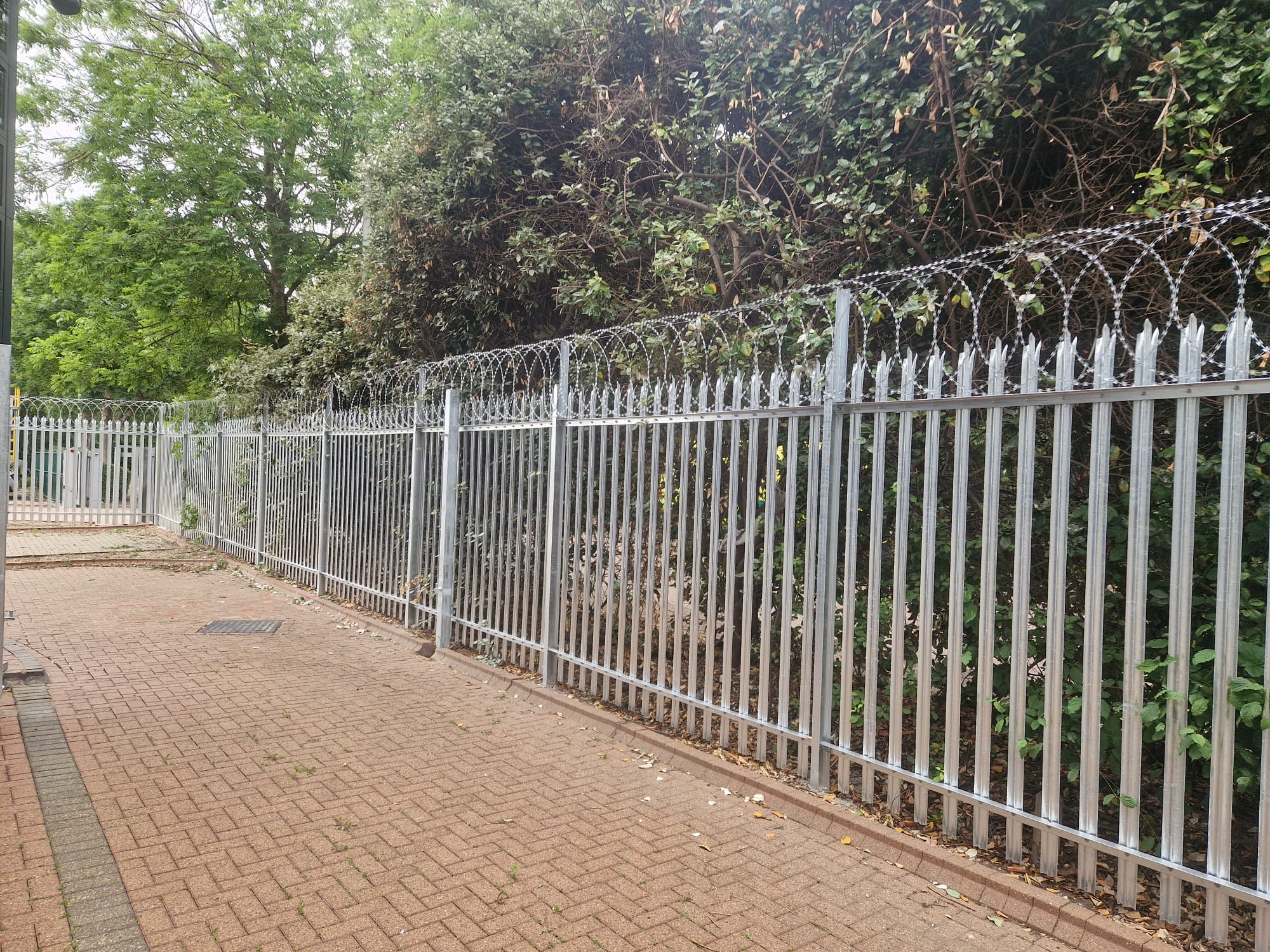
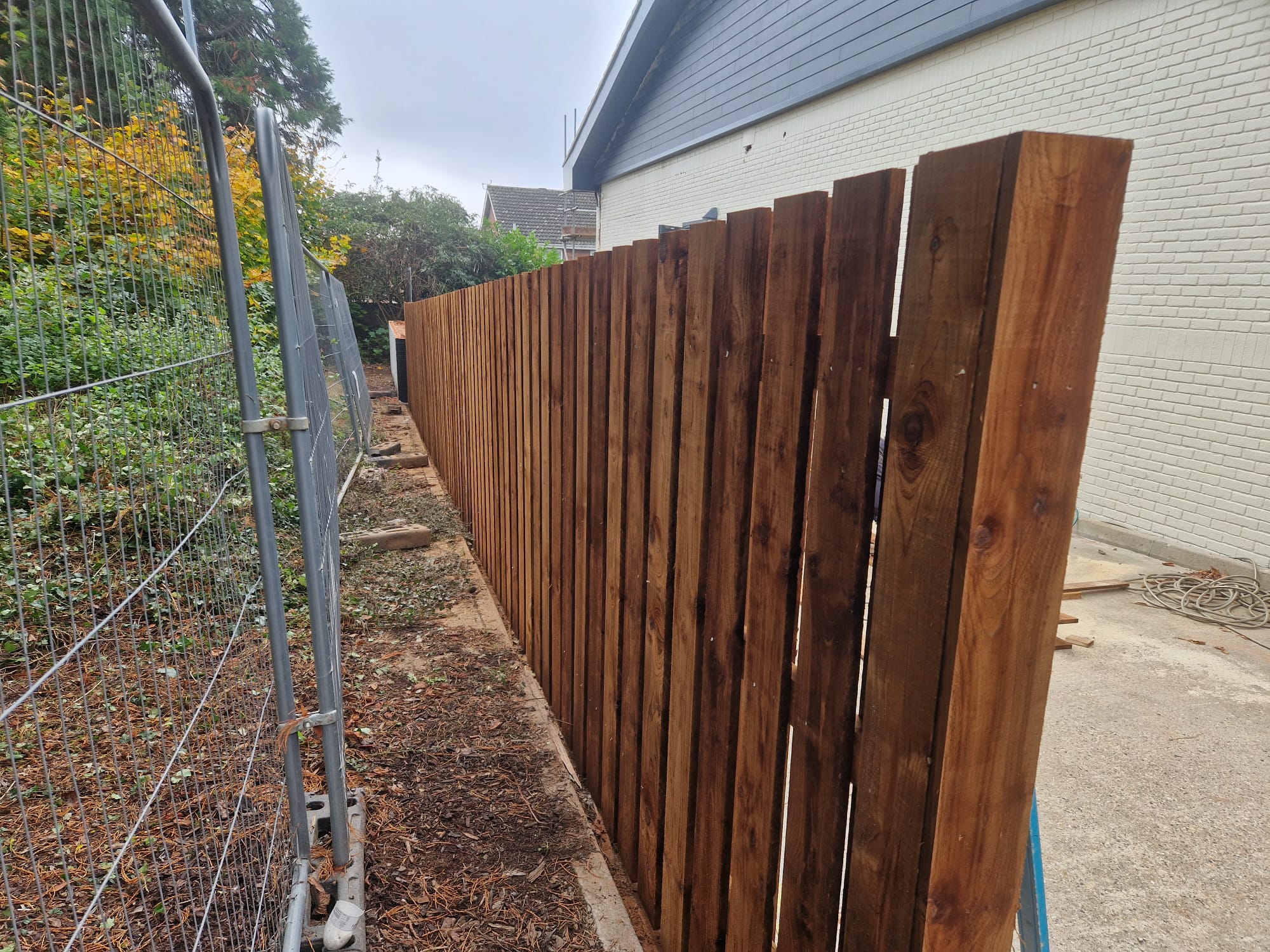
Commercial fencing installation across Essex and surrounding areas
Typical applications
Staff entrances, schools, car parks, compounds, walkways
Systems
Steel-framed gates with mesh, bar or timber infill
Operation
Manual, self-closing, or access-controlled
Finish options
Galvanised, or powder-coated to match the fence
Overview
A pedestrian gate is the most used component of a boundary. It gets opened dozens of times a day, held open, leaned on and kicked shut, which is why light domestic-grade gates fail so quickly on commercial premises. The specification that matters is hinges, frame construction and post foundations, not the size of the opening.
It also has to be easy enough to use that people actually use it. Where a personnel gate is awkward, stiff or badly placed, staff and contractors find another route or prop it open, and the perimeter is compromised by convenience rather than attack. Position, width and closing arrangement are worth as much thought as the leaf itself.
Security detailing is straightforward but easily missed: a gap at the ground line that gives a foothold, a hinge line that can be lifted, a lock that is convenient to leave unlatched, or a gate that opens onto a blind vehicle route. On schools and public premises the safe-route considerations matter as much as the security ones.
We set out pedestrian openings with the fence line rather than adding them later, so posts, foundations and infill are consistent and the gate reads as part of the boundary. Where access needs controlling, keypads, fobs or intercom can be integrated on installation.
Applications
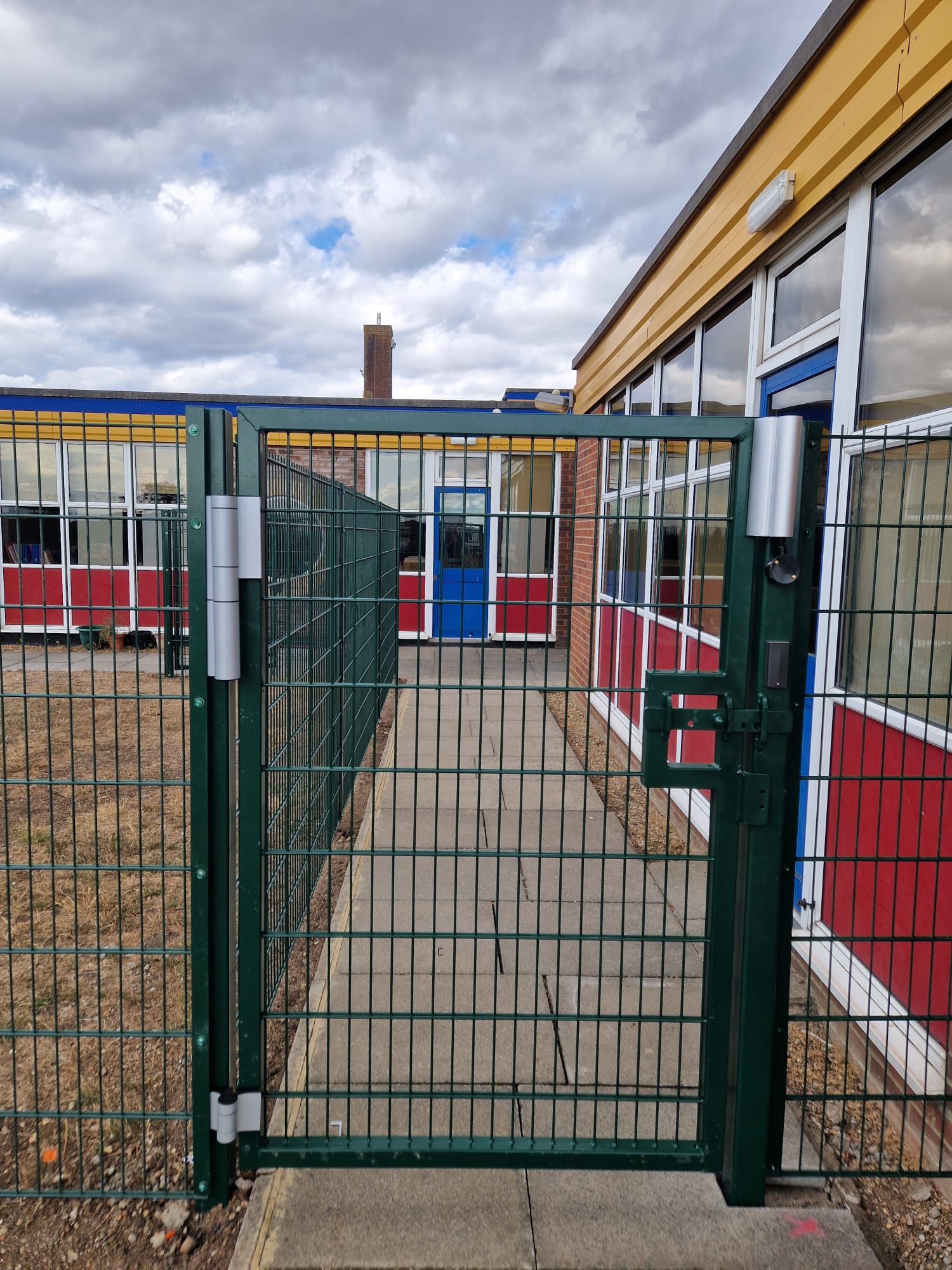
Personnel gates suit every point where people, rather than vehicles, need to cross the boundary.
Why it works
Commercial hinges, braced frames and proper foundations, because this is the most used part of the perimeter.
Width, position and closing arrangement chosen so nobody has a reason to prop the gate open.
Ground line, hinge side and locking detailed so the opening is not easier to defeat than the fence.
Keypads, fobs or intercom integrated where entry needs restricting to staff.
Specification
Width, infill, closing and locking arrangements are confirmed with the fence specification at survey.
Final specification is confirmed following a site survey.
Our process
We inspect the boundary, access, ground conditions and operational requirements.
We recommend a suitable fencing system, height, finish and gate configuration.
The work is coordinated to minimise disruption and maintain safe site access.
The fencing and gates are installed carefully, checked and left with a clean, consistent finish.
Specification enquiry
A personnel gate has to be convenient, robust and no weaker than the fence it sits in. Pro Fencing can advise on position, width, infill, closing and locking arrangements, and integrate keypad, fob or intercom entry where access needs restricting to staff and contractors.
Why Pro Fencing
We assess how the boundary needs to perform before recommending a fencing system, finish or gate configuration.
Fencing for industrial, educational, commercial and public environments.
Recommendations based on the boundary, ground, access and security requirement.
Installation coordinated to maintain safe access and minimise disruption.
A defined route from site survey and specification through to installation.


Coverage
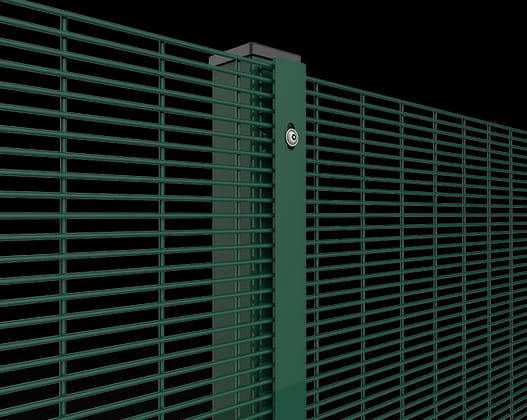
Pro Fencing supplies and installs commercial fencing systems throughout Essex. We work with businesses, schools, contractors, sports facilities and public-sector organisations, providing site-specific fencing and gate solutions for new installations, upgrades and boundary replacements.
FAQs
Wide enough for the traffic it carries, including anyone using a wheelchair, pushing equipment or carrying materials. A narrow gate on a busy staff route ends up propped open. Where deliveries or trolleys pass through regularly, a wider leaf or a second opening is usually the practical answer.
On security and safeguarding-sensitive boundaries, yes. A gate that closes itself removes the reliance on people remembering. On routes where staff carry materials through repeatedly, a self-closer can become an obstacle and lead to it being wedged open, so it is worth deciding per opening rather than as a blanket rule.
Yes. Keypads, fob readers or intercom release from reception all work on pedestrian gates, and free-exit arrangements can allow people to leave without a code. The choice usually comes down to how many people need access and how often that group changes, since keypad codes drift over time.
Because they are specified like domestic gates and used far harder. Lightweight hinges wear, unbraced frames rack out of square, and shallow post foundations move until the gate no longer latches. Sizing hinges and foundations for constant use costs very little at installation and prevents most of those failures.
Usually yes, provided the fence and its posts are sound. New gate posts are set with foundations sized for the leaf, and the infill is matched to the existing fence as closely as the system allows. If the surrounding fence is already failing, it is worth dealing with that run at the same time.
We install commercial pedestrian gates throughout Essex and the surrounding areas, including Basildon, Brentwood, Chelmsford, Wickford, Rayleigh, Grays, Thurrock, Southend-on-Sea, Romford, Harlow and Colchester.
Get started
Talk to Pro Fencing about your site, security requirements and installation timeframe. We can assess the boundary and recommend a suitable solution.